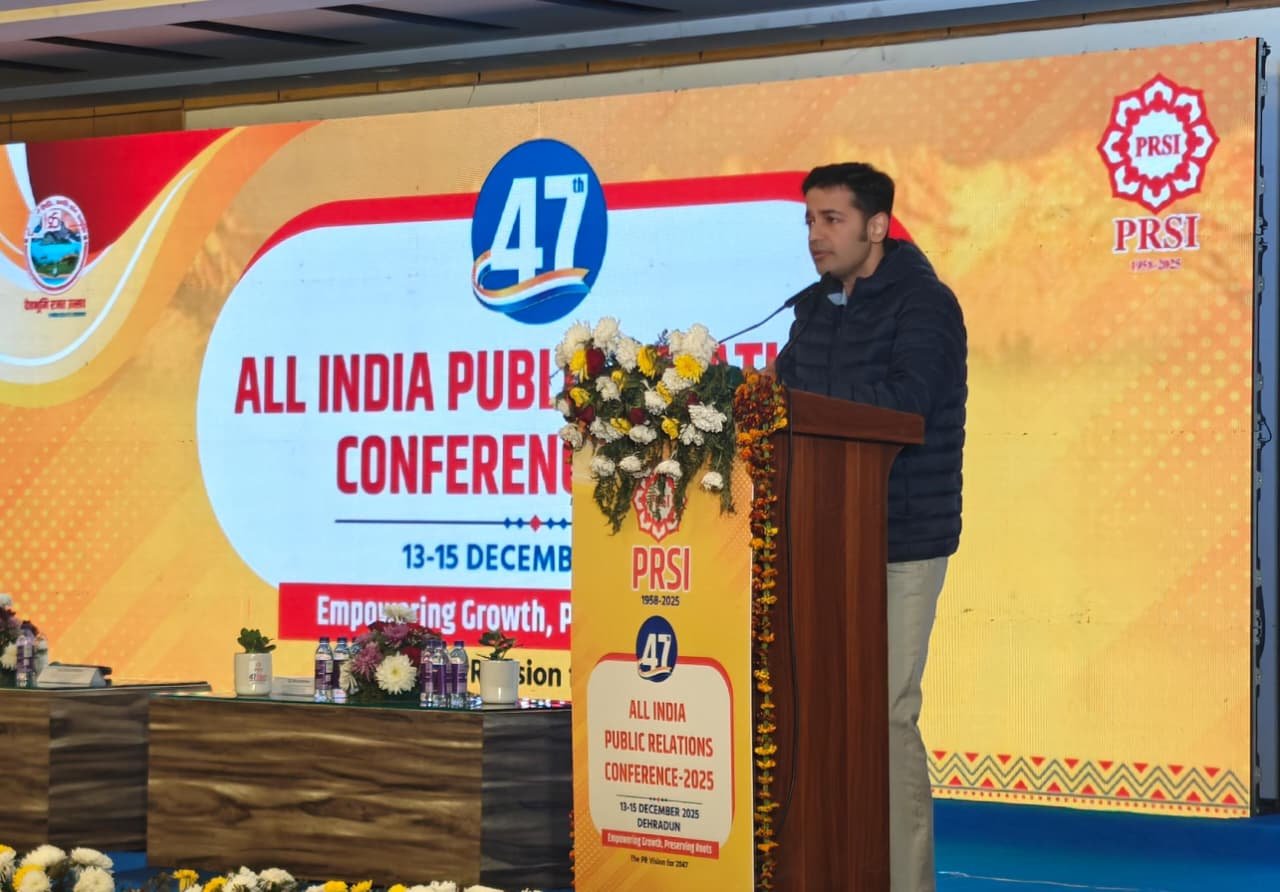
DEHRADUN: In the context of rising digital risks, ASP Ankush Mishra cautioned citizens against sharing personal information on social media platforms adding that artificial intelligence has transformed cybercrime methods, making fraud faster, more convincing, and difficult to detect. His remarks set the tone for discussions on the third day of the ongoing national conference of the Public Relations Society of India in Dehradun.
Addressing communication professionals, officials, and delegates from across the country, ASP Mishra said awareness remains the strongest defence in the era of artificial intelligence. He warned that technologies such as voice cloning and deepfake videos can easily mislead unsuspecting users. “Do not fear artificial intelligence, but remain alert and informed,” he said, urging responsible digital behaviour.
Today’s conference sessions predominantly focused on artificial intelligence, cybercrime, misinformation, and their growing impact on public communication and society. Speakers highlighted that AI has become a powerful tool for efficiency, but also a serious threat when misused. The session stressed that individuals and institutions must adapt quickly to protect data and credibility.
ASP Mishra explained that cybercrime no longer requires physical proximity or direct contact. “You can become a victim of cyber fraud while sitting at home,” he said. He added that criminals now use AI tools to imitate voices of family members, create fake videos, and manipulate images. He advised citizens to avoid clicking unknown links and sharing personal or professional details online.
Our correspondent reports that the police officer also warned that sharing deepfake content carries legal consequences. He said even forwarding such material can attract criminal liability. He appealed to parents to monitor children’s online activities and educate them about digital risks. He said cyber awareness should become part of everyday life, not just a reaction after fraud occurs.
The session also examined the changing role of public relations in the age of artificial intelligence. Speakers said AI has reshaped how organisations analyse data, monitor media, and understand audience behaviour. However, they cautioned that speed should not compromise accuracy or ethics in communication.
Vinay Jaiswal, Assistant General Manager at Steel Authority of India Limited, said AI has made communication faster, more precise, and more impactful. “Data analysis, media monitoring, and audience analytics have improved significantly with artificial intelligence,” he said. He added that institutions must ensure ethical and secure use of these tools. “Technology should support trust, not weaken it,” he said.
The discussion also highlighted that technological progress brings new responsibilities for communication professionals. Speakers said public relations teams must prepare for challenges such as misinformation, privacy breaches, and social polarisation. Training, ethical standards, and clear strategies were described as essential safeguards.
Our correspondent adds that academic perspectives enriched the discussion, especially on the limits of artificial intelligence. Assistant Professor Taha Siddiqui said AI cannot replace human judgement, creativity, or empathy. “Artificial intelligence cannot replace humans, but it can become a strong assistant,” she said. She encouraged young professionals to treat AI as an opportunity for growth, not a threat.
The session further explored corporate communication strategies in the digital age. US Sharma, National Vice President of PRSI, said communication is no longer limited to sharing information. “Corporate communication shapes trust, credibility, and identity,” he said. He added that transparency and timely response are crucial in a digital environment where misinformation spreads rapidly.
Corporate leaders shared experiences on how public communication supports organisational credibility. Irfan Rasheed from REC said communication should be viewed as dialogue with stakeholders, not promotion. “A strong communication strategy sustains trust over time,” he said, highlighting the role of media relations and digital platforms.
Environmental communication also featured prominently in discussions. THDC official Amar Nath Tripathi spoke about the role of public relations in promoting clean energy and sustainability initiatives. He said effective communication helped build public understanding of large infrastructure projects and environmental responsibility.
Delegates agreed that artificial intelligence presents both risks and opportunities for society. Speakers emphasised that ethical use, awareness, and regulation are essential to harness AI positively. They said misinformation and cybercrime threaten democratic discourse and social harmony if left unchecked.
The PRSI leadership said the conference aimed to equip communication professionals with knowledge and responsibility. National President Ajit Pathak said the deliberations conveyed a clear message. “Artificial intelligence is a challenge, but also a major opportunity,” he said. He stressed that cyber security awareness and responsible digital conduct are now fundamental professional duties.
As the conference moved towards its conclusion later in the day, participants said the sessions provided practical insights and cautionary guidance. The emphasis on vigilance, ethics, and public trust reflected growing concern over digital misuse. Organisers said the outcomes would guide future practices in public relations and communication across sectors.
Dheeraj reports on governance, public services, jobs, and regional developments across Uttarakhand. He specialises in recruitment news, public-sector updates, and civic issues that impact everyday citizens. His reporting brings accuracy, context, and a grassroots perspective to local journalism.