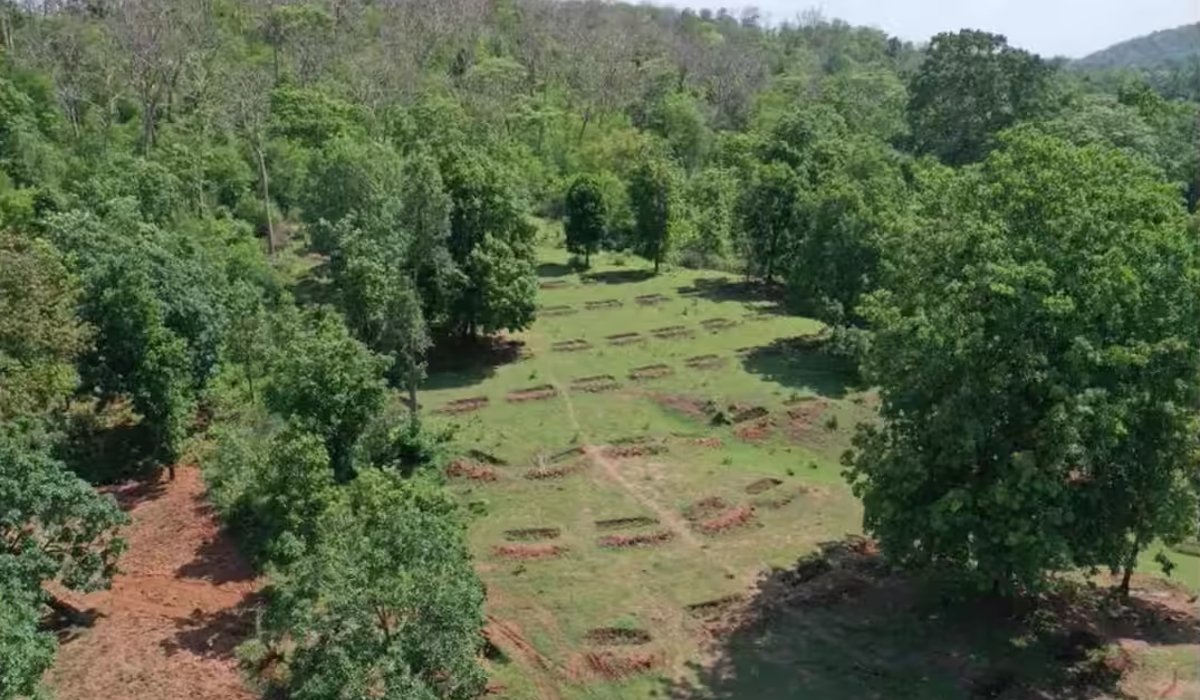
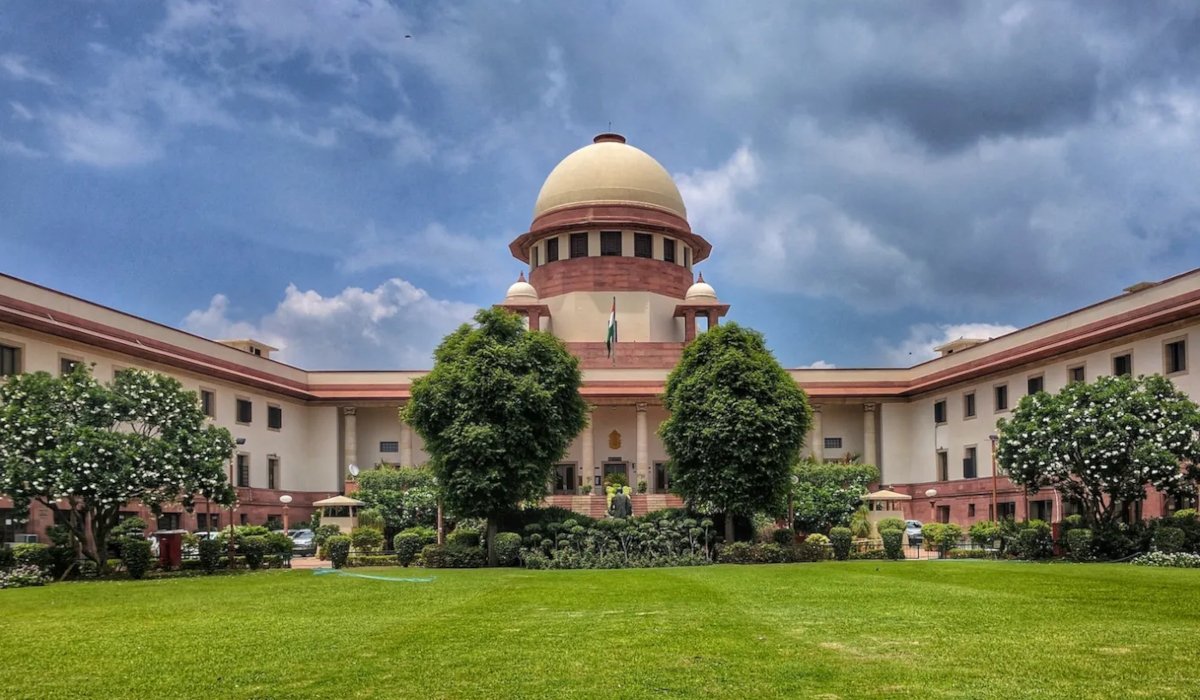
NEW DELHI: The Supreme Court on Monday expressed strong displeasure over large-scale encroachment and alleged forest land grabbing in the state, sharply criticising the state government and its authorities for remaining “mute spectators” while valuable forest areas were unlawfully occupied. Taking suo motu cognisance of the issue, the apex court directed immediate steps to stop construction activities on disputed forest land and initiate measures to reclaim vacant forest areas in accordance with law.
A bench comprising Chief Justice Surya Kant and Justice Joymalya Bagchi observed that the situation reflected serious administrative failure and raised grave concerns about environmental governance in the Himalayan state. The court said it was “shocking” that state authorities appeared to have allowed encroachments to continue unchecked over the years, despite the ecological sensitivity of Uttarakhand and the constitutional obligation to protect forest resources.
The Supreme Court directed the Chief Secretary of Uttarakhand and the Principal Chief Conservator of Forests to constitute a fact-finding committee to examine the extent of forest land encroachment and submit a detailed report before the court. The bench also ordered that no further construction be permitted on forest land under dispute and that no third-party rights be created on such land until further orders.
Our correspondent reports that the court’s intervention came amid allegations that thousands of acres of forest land in Uttarakhand had been illegally occupied for residential, commercial and other non-forest purposes. The bench noted that the passive approach of the administration had enabled systematic encroachment, causing long-term damage to forests, wildlife habitats and fragile mountain ecosystems.
During the hearing, the court underlined that forest land is not merely state property but a critical ecological asset that safeguards biodiversity, water sources and climate stability. The judges said failure to protect forests directly affects public interest and future generations, especially in a state prone to landslides, floods and environmental degradation.
Our correspondent adds that the bench directed the Forest Department to immediately take possession of all vacant forest land, except where residential houses legally exist, and to proceed against encroachers strictly in accordance with law. The court stressed that administrative hesitation or political considerations could not be allowed to override environmental protection mandates.
Senior lawyers appearing before the court highlighted that Uttarakhand’s hilly terrain, combined with expanding urbanisation and tourism-related activities, had increased pressure on forest land. They pointed out that weak enforcement, outdated land records and lack of coordination between departments had contributed to the problem. The court responded by stating that such systemic gaps could no longer be an excuse for inaction.
The bench also sought explanations from state officials on the steps taken so far to identify encroachments, maintain updated land records and initiate eviction proceedings. It observed that existing actions appeared inadequate and directed authorities to place all relevant reports and data on record at the next hearing.
Our correspondent reports that environmental experts and conservation activists welcomed the Supreme Court’s firm stance, describing it as a crucial step towards restoring accountability in forest governance. They said unchecked encroachment had not only reduced forest cover but also weakened natural barriers against disasters, adversely affecting local communities.
Activists further noted that forests in Uttarakhand play a vital role in regulating river systems, preventing soil erosion and sustaining tourism-based livelihoods. They said that judicial intervention was necessary to reverse years of administrative apathy and to send a strong message that environmental violations would not be tolerated.
Public reactions also reflected growing concern over environmental degradation in the state. Citizens and civil society groups stressed the need for transparent land management, use of technology for mapping and monitoring forest boundaries, and strict penalties to deter future encroachments.
The Supreme Court made it clear that forest conservation is not optional but a legal and moral responsibility of the state. It said that failure to act decisively could lead to irreversible ecological damage, particularly in a Himalayan region already facing the effects of climate change.
The matter has been listed for further hearing after the court’s winter recess. The findings of the fact-finding committee and the action taken by the state government will form the basis of subsequent judicial directions. The bench indicated that it would closely monitor compliance to ensure that forest land is protected and restored wherever possible.
The court’s observations are expected to have far-reaching implications for environmental governance in Uttarakhand, signalling stricter scrutiny of land use practices and stronger enforcement oforee forest protection laws in the state.
Dheeraj reports on governance, public services, jobs, and regional developments across Uttarakhand. He specialises in recruitment news, public-sector updates, and civic issues that impact everyday citizens. His reporting brings accuracy, context, and a grassroots perspective to local journalism.