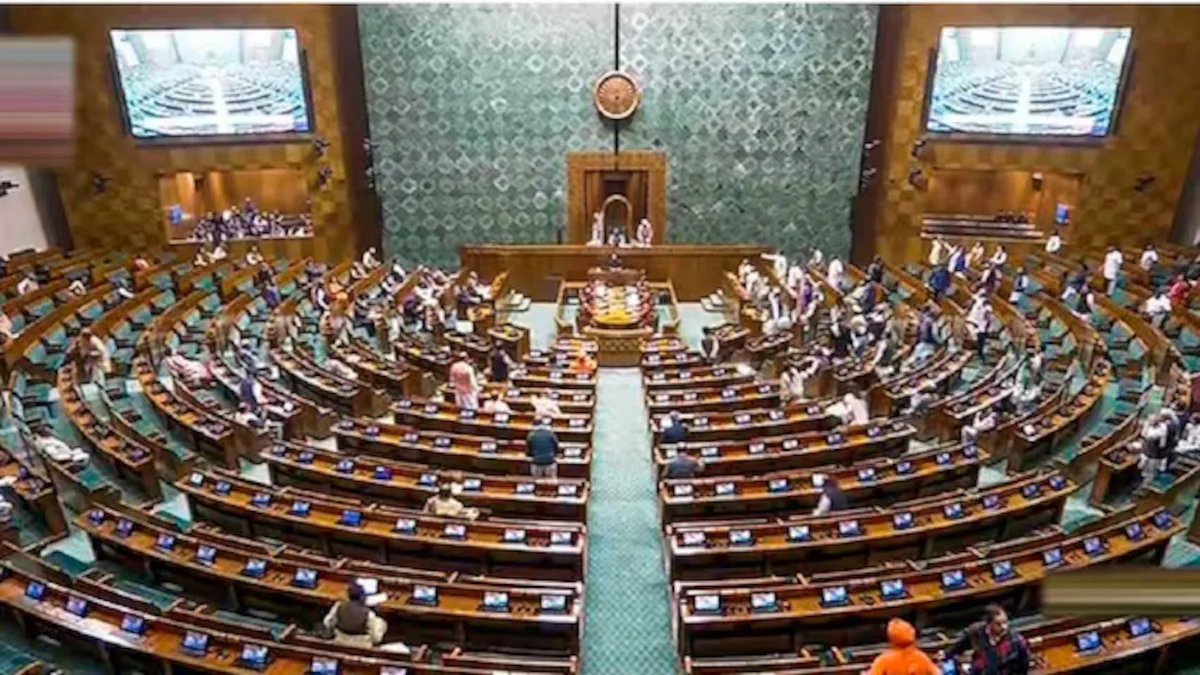
NEW DELHI: In a historic policy initiative aligned with the national vision of Developed India @ 2047, the Union Government on Tuesday introduced a comprehensive rural development legislation in the Lok Sabha that seeks to guarantee extended wage employment and strengthen rural livelihoods across the country. The Viksit Bharat – Guarantee for Rozgar and Ajeevika Mission (Gramin) Bill, 2025, presented by Union Minister for Rural Development Shivraj Singh Chouhan, aims to provide a legal guarantee of 125 days of wage employment per financial year to eligible rural households, while simultaneously creating a future-ready, convergence-based rural development framework.
The Bill proposes a significant expansion of the existing rural employment architecture by combining employment assurance with infrastructure creation, livelihood support, transparency mechanisms and technology-enabled governance. According to the Minister, the legislation is designed to respond to the changing aspirations of rural India, where improved connectivity, higher incomes, digital inclusion and climate resilience have become central priorities.
Introducing the Bill, the Minister said that rural India has undergone profound transformation over the past two decades and now requires a more integrated and forward-looking development approach. He stated that the new framework would not only provide assured employment but also strengthen productive rural assets and public infrastructure in a coordinated manner.
“This Bill seeks to empower rural families by guaranteeing wage employment while building durable infrastructure that supports livelihoods, water security and disaster resilience,” the Minister said. He added that the legislation reflects the government’s commitment to inclusive growth and balanced national development.
Under the proposed law, every rural household with adult members willing to undertake unskilled manual labour will be entitled to 125 days of guaranteed wage employment annually, an increase from the existing 100-day limit. Until revised wage rates are notified by the central government, prevailing rates under the Mahatma Gandhi National Rural Employment Guarantee framework will continue to apply. The Bill also provides for payment of unemployment allowance by state governments if employment is not provided within 15 days of demand.
Our correspondent reports that a central feature of the Bill is the creation of a unified Viksit Bharat National Rural Infrastructure Stack, which will bring all eligible rural public works under a single national framework. Priority sectors identified under the legislation include water security and water-related works, core rural infrastructure, livelihood-supporting assets and projects aimed at mitigating the impact of adverse climatic events. The approach is intended to ensure the creation of productive, sustainable and climate-resilient rural assets across regions.
Our correspondent adds that planning under the Bill will follow a bottom-up approach, anchored in Viksit Gram Panchayat Plans. These plans will be prepared by gram panchayats using spatial technologies such as GPS mapping and will be integrated with the PM Gati Shakti platform to ensure convergence and saturation of schemes. The plans will then be consolidated at block, district and state levels to align local priorities with broader regional and national development goals, creating a whole-of-government rural development structure.
The legislation also includes provisions to protect agricultural operations during peak farming seasons. State governments will be empowered to notify up to 60 days in a financial year during which works under the Act may be suspended, ensuring adequate availability of farm labour during sowing and harvesting periods.
To operationalise the guarantee, each state government will be required to prepare an implementation scheme within six months of the Act coming into force. The programme will be implemented as a centrally sponsored scheme, with a funding pattern of 90:10 for north-eastern and Himalayan states and 60:40 for other states and legislature-enabled Union Territories.
The Bill places strong emphasis on transparency and accountability. It mandates a robust governance ecosystem built on digital public infrastructure, including biometric authentication, spatial planning and monitoring tools, mobile-based reporting systems, real-time dashboards and AI-enabled analytics. A strengthened social audit mechanism is also envisaged to ensure high-integrity implementation.
Weekly public disclosure has been made a statutory requirement under the proposed law. Gram panchayats will conduct weekly information meetings at panchayat buildings, displaying details related to works, payments, complaints, muster rolls and project progress. This information will be made available in both physical and digital formats, enhancing public oversight and community participation.
Officials said the Bill introduces a normative allocation system based on objective parameters to ensure equitable distribution of financial resources among states. State governments will further ensure transparent and need-based allocation of funds among districts and gram panchayats, taking into account local development requirements and panchayat categories.
The background note accompanying the Bill highlights that rural India has witnessed saturation-based implementation of major schemes, expanded access to housing, drinking water, sanitation and electricity, deeper financial inclusion and diversification of the rural workforce. These shifts, the government argues, necessitate a recalibrated rural development strategy that is technology-enabled, convergence-driven and responsive to rising aspirations.
The Minister said that as national development accelerates, rural development programmes must be periodically reviewed and redesigned to remain relevant. “This Bill represents a transformative step towards empowering rural families through stronger livelihood guarantees and integrated asset creation,” he said.
The proposed legislation is expected to be examined by parliamentary committees before further discussion and passage. If enacted, it would mark one of the most significant expansions of statutory rural employment guarantees since the introduction of wage employment laws in India, with far-reaching implications for rural livelihoods, infrastructure and long-term development.
Dheeraj reports on governance, public services, jobs, and regional developments across Uttarakhand. He specialises in recruitment news, public-sector updates, and civic issues that impact everyday citizens. His reporting brings accuracy, context, and a grassroots perspective to local journalism.