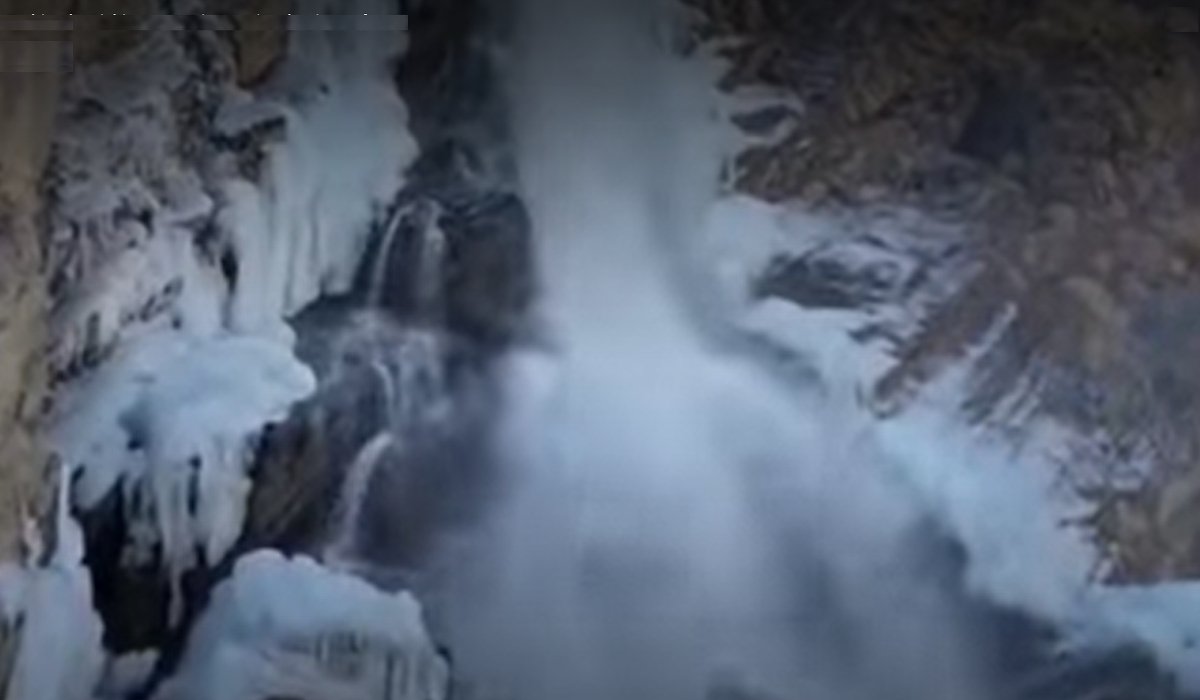
CHAMOLI: The Meteorological Department on Saturday forecast rainfall and snowfall in the upper reaches of the state, even as the Rishi Ganga river froze near Badrinath, signalling a sharp drop in temperatures across higher Himalayan regions of the state. The weather system is expected to affect districts located at higher altitudes, with cold wave conditions intensifying in several mountain areas.
Officials of the India Meteorological Department said that light to moderate snowfall was likely in high-altitude regions of Chamoli, Pithoragarh, Uttarkashi and Rudraprayag during the day. Rainfall was also forecast at lower elevations, particularly during the evening and night hours, due to the movement of a western disturbance.
The freezing of the Rishi Ganga near the Badrinath shrine area marked a significant seasonal shift, indicating sub-zero temperatures in the region. Local residents and priests associated with the shrine said such freezing conditions generally occur only during peak winter months, reflecting the severity of the cold spell setting in earlier this season.
Our correspondent reports that temperatures in Badrinath, Mana, Hemkund Sahib route areas and nearby villages dropped sharply overnight, with water sources, pipelines and small streams beginning to freeze. Morning temperatures in several upper Himalayan settlements remained below freezing, while icy winds further reduced the perceived temperature.
The weather department said that the ongoing cold conditions were caused by persistent northerly winds and clear night skies, which allowed rapid heat loss from the surface. Officials advised residents and travellers to avoid unnecessary movement in snow-prone zones and follow advisories issued by district administrations.
Our correspondent adds that pilgrims, local traders and security personnel stationed near Badrinath were seen taking precautionary measures to protect themselves from extreme cold. Temporary shelters were reinforced, and additional heating arrangements were made in vulnerable locations. Authorities also reviewed road conditions on mountain routes, particularly those connecting Joshimath, Mana and surrounding border villages.
The weather office further stated that snowfall in the upper reaches could lead to temporary road closures due to icy surfaces and reduced visibility. District administrations were asked to remain on alert and keep snow-clearing equipment and emergency teams ready, especially along strategic routes and habitation clusters near the Line of Actual Control.
Comparing current conditions with last year’s weather during the same period, officials noted a sharper and earlier decline in temperatures this December. During mid-December last year, most high-altitude areas had experienced intermittent snowfall, but river systems like the Rishi Ganga had not frozen to this extent. Snowfall during the corresponding period last year was reported mainly above higher elevations, while temperatures in mid-range valleys remained marginally higher.
Meteorological records indicate that in December last year, Badrinath recorded minimum temperatures hovering close to zero, with freezing conditions becoming widespread only towards the end of the month. This year, however, sustained cold spells have already pushed temperatures below zero in multiple locations, indicating a stronger influence of continental cold air masses.
Last year, rainfall and snowfall during this period were sporadic and linked to weaker western disturbances. The current system, according to experts, appears more organised, with moisture-laden winds interacting with cold air over the Himalayas. This interaction has increased the likelihood of snowfall at relatively lower altitudes compared to the same dates last year.
Climatologists said that year-to-year variations are influenced by broader atmospheric patterns, including the positioning of jet streams and the frequency of western disturbances. They added that while early freezing of rivers is not unprecedented, it remains an important indicator of changing seasonal behaviour and requires close monitoring.
The freezing of the Rishi Ganga has also drawn attention due to the river’s past significance in natural disasters. Local authorities clarified that the current freezing is a surface phenomenon caused by sustained cold and does not indicate any immediate hydrological risk. Continuous monitoring of river flow and glacial conditions, however, has been advised as a precaution.
Weather officials said that cold wave conditions could intensify further over the next forty-eight hours, with night temperatures expected to fall by another one to two degrees in higher elevations. Day temperatures are also likely to remain below normal, particularly in snow-covered regions.
Tourism stakeholders expressed cautious concern, noting that while snowfall enhances the winter landscape, sudden temperature drops can disrupt travel plans and local livelihoods. Hoteliers in hill towns said bookings were steady but emphasised the need for accurate weather updates to ensure visitor safety.
The Meteorological Department said that conditions would be reviewed daily and updated forecasts issued accordingly. Residents in mountainous districts were advised to protect water supply lines, livestock and crops from frost damage, while travellers were urged to check road and weather updates before commencing journeys.
As Uttarakhand enters the core winter period, authorities said coordinated preparedness between weather agencies, disaster management units and local administrations remains essential to minimise disruption and ensure safety across the Himalayan region.
Dheeraj reports on governance, public services, jobs, and regional developments across Uttarakhand. He specialises in recruitment news, public-sector updates, and civic issues that impact everyday citizens. His reporting brings accuracy, context, and a grassroots perspective to local journalism.